Culvert Country: Seed of Doubt
Whisper to total Destruction
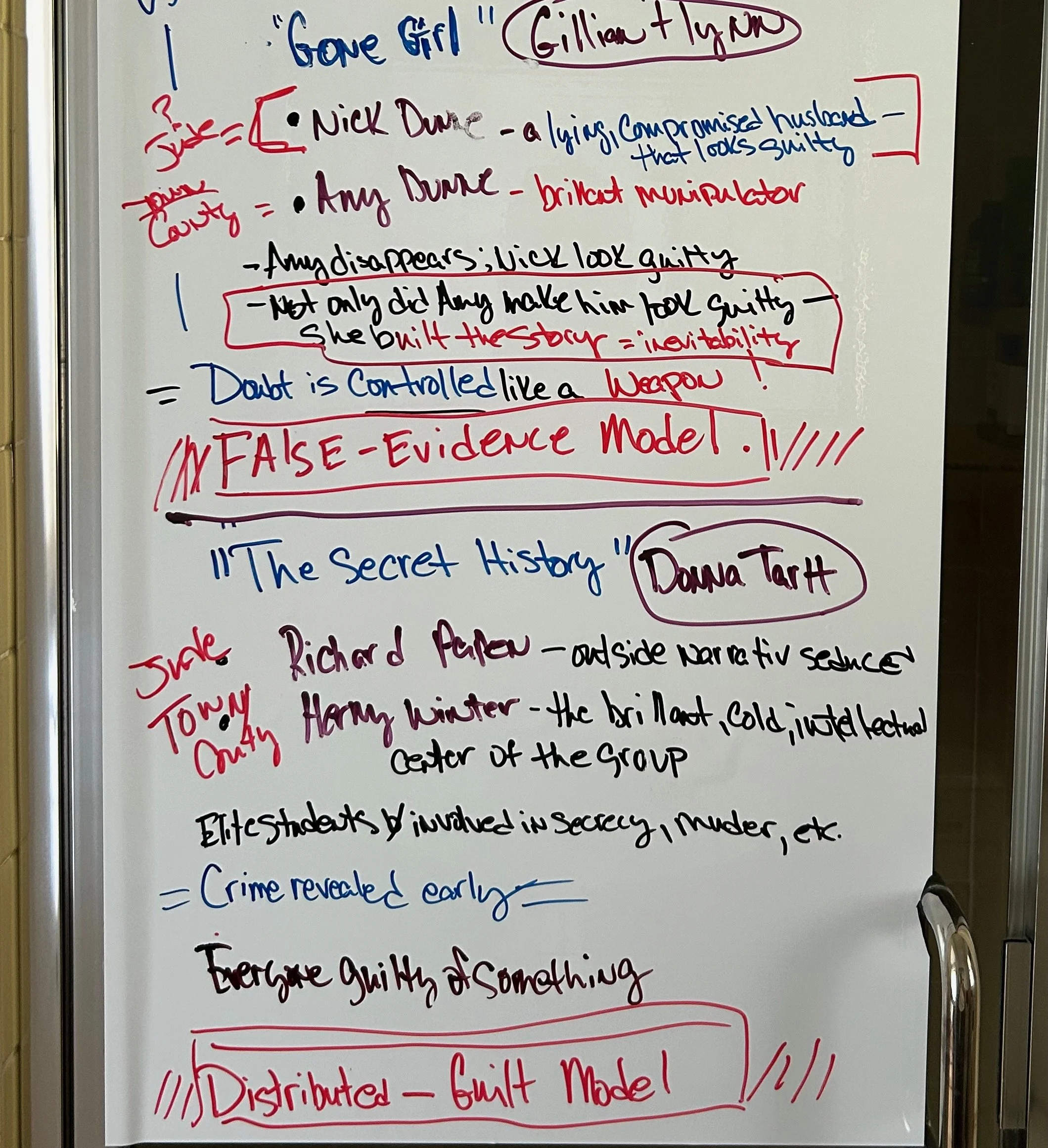
Part of the on-going discussion about what drives this story as I still plan it out. There’s a couple of important concepts of writing to point out here.
Someone Plants the Doubt
This is the active manipulation model.
One character deliberately introduces suspicion, then lets another character’s imagination do the rest. I’m fascinated with this as it plays out in many literary masterpieces. Also, in movies.
My legal studies at Concord Law we studied theories regarding seed of doubt as it relates to the legal process. Since I never got to mock trial, I only touched upon the theory in studying other doctrines. But I learned that it’s used by the defense in criminal cases, and the constitutional foundation is the prosecution’s obligation to prove every element of the crime beyond a reasonable doubt. The defense ordinarily need not prove innocence or establish exactly what happened.
In storytelling terms, the seed is introduced early, watered down by contradictions, and finally connected to a legally necessary conclusion.
In “Culvert Country”, a short story limited to prose real estate and therefore challenging to present all the 4Ws + H as a traditional mystery. I don’t feel that’s necessary in this writing project because this is not a traditional murder mystery.
I’m glad I got that off my chest.
The pressure was killing me.
So what’s the payoff?
The town as a body is being gaslighted by the authority that control the flow of evidence.
Below are two useful models in writing that I’ve learned and applied to this short story as best I could because it intrigues me. I particularly thought of the story as I worked through the model, thinking and using all physical objects.
This story genre is a something I’ve coined as “neoir”. Phonetically: /niːˈwɑːr/ a crossover between noir/southern gothic. The elements are:
Noir supplies crime, secrecy, corruption, and moral compromise.
Southern Gothic supplies inheritance, grotesquerie, social decay, and sometimes the haunted past.
Southern rot is the physical atmosphere: rust, mildew, kudzu, collapsing houses, spoiled institutions, and buried violence resurfacing.
These elements are often found in all of my writing, even my humorous essays. Growing up in the south I not only explore it, I exploit it.
Let’s take a closer look at two models:
1.The False Evidence
The False Evidence Model is when doubt is controlled through things that look factual.
Not feelings. Not rumors alone. Not vibes.
It is doubt created by:
recordings
blood
camera footage
witness statements
official reports
staged scenes
“everybody knows” facts that appear provable
The list goes on, even to things like receipts, etc.
The trick is that the evidence does not have to be completely fake. Evidence was planted, altered, transferred, contaminated, or presented without a trustworthy chain of custody.
The strongest version, the evidence is often partly true— but arranged to tell the wrong story.
That is why it is so powerful.
And why it works so well in this story.
I’ve used the book Gone Girl for a muse:
In Gone Girl, written by Gillian Flynn, Amy doesn’t merely accuse Nick. She builds a world where Nick looks guilty. The diary, the clues, the staged disappearance, the public image of the bad husband — all of it makes suspicion feel rational. The reader and the police are not just wondering, “Could he have done it?” They are looking at a manufactured trail that says, “Of course he did.”
That is the false evidence model.
The doubt is not planted in someone’s mind only. It is planted in the record.
For Culvert Country, this is Jude’s truck.
Wade’s blood underneath/front-end area of Jude’s truck is powerful because it gives the county something that looks objective. People do not have to dislike Jude. They do not even have to fully believe Vance. They can simply say:
Blood don’t lie.
The evidence is real.
The story attached to it is false.
So the dramatic question becomes:
Who arranged reality so it would point at the wrong person?
This model is good to show pressure from police, public opinion, law, paperwork, and physical facts.
It makes the innocent person look trapped because the lie has entered the official world.
That is the heart of the False Evidence Model.
2. Distributed-Guilt
The Distributed-Guilt Model is different. It is not mainly about fake evidence. It’s about a whole community, group, family, institution, or social circle being morally compromised.
In this model, the mystery gets foggy because too many people are hiding something.
Not necessarily the same thing.
Not necessarily the murder.
But something.
You best believe that means almost everyone has a reason to lie, minimize, misremember, look away, protect somebody, or keep quiet.
I used the book The Secret History as a muse:
In The Secret History, written by Donna Tartt, the story is not tense because we simply wonder who committed the crime. The book tells us early. The real tension comes from the group’s shared corruption. Everyone is tangled in secrecy, vanity, loyalty, cowardice, class fantasy, and guilt. The truth becomes morally fogged because nobody is clean enough to tell it straight. The doubt is not one planted clue. It is spread across the room.
For Culvert Country, this is the town.
Maybe one person killed Wade?
Maybe more.
But the larger noir power comes from this:
Della knows pieces.
Raylene knows pieces.
The lodge men know pieces.
The sheriff’s office knows more than it says.
Somebody owes somebody.
Somebody’s scared.
Somebody stays quiet.
Staying quiet is how they survive.
The town itself becomes a suspect.
Not because everybody murdered Wade, but because everybody helped create the conditions.
That is the distributed-guilt model.
The Difference Between Them
The False Evidence Model is external.
It gives you the staged clue, the blood, the camera, the receipt, the report.
The Distributed-Guilt Model is social and moral.
It gives you the silence around the clue.
How They Work Together
This is where it gets really useful for your story.
A basic mystery might only have false evidence:
Wade’s blood is on Jude’s truck, so Jude looks guilty.
That’s solid. That works.
But a deeper noir has false evidence inside distributed guilt:
Wade’s blood is on Jude’s truck, and half the town knows enough to question it, but nobody wants to be the person who says so.
That is much better. Because now Cal is not just fighting a clue. He is fighting a social organism.
The sheriff can use the evidence because the town is already trained to accept certain lies. The lodge men can stand in public because they know silence has local power. Raylene can be scared because telling the truth doesn’t merely correct a mistake—it puts her inside the machine.
In Culvert Country, the strongest formulation is:
The false evidence gives the lie a body.
The distributed guilt gives the lie a town to live in.
That’s the engine.