 Image 1 of 1
This is not a child narrating fear.
It’s an adult looking back—finally calling the fear by its real name.
Growing up queer in the Deep South meant learning early how to carry yourself.
To survive.
To turn humiliation into style.
It’s tucking chunks of myself away to spare Mama.
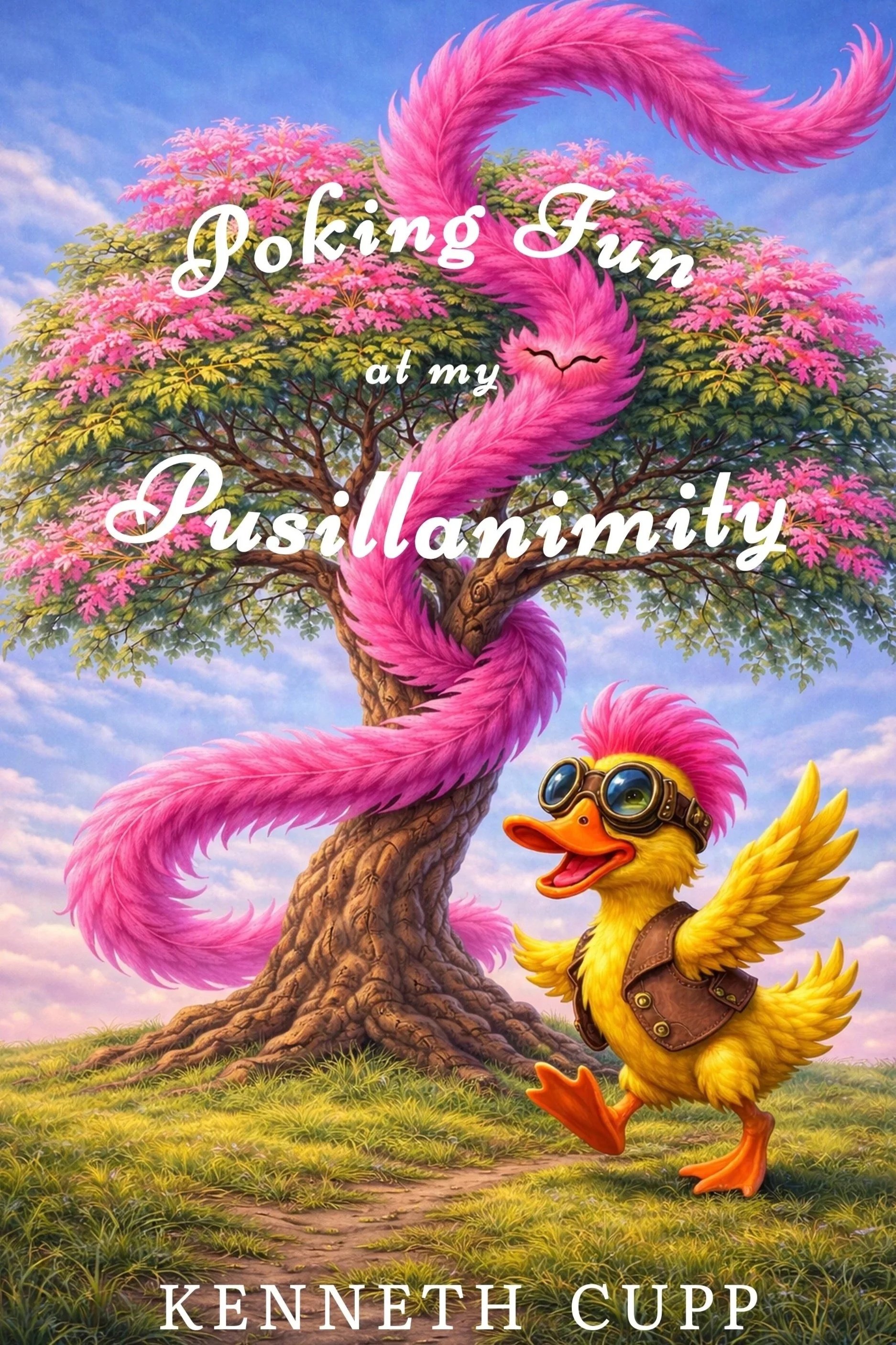
In Poking Fun at My Pusillanimity, Kenneth Cupp revisits his 1980s Mississippi childhood through kid’s logic with adult humor, precision, and unflinching honesty. Across a series of interconnected essays he moves through faith, shame, rumor, camp, danger, imagination, and the long work of reclaiming courage in a voice once taught to whisper.
This is a queer Southern becoming.
Not nostalgia.
Not apology.
Just the truth—told with teeth, tenderness, and nerve.
Vengeance don’t ever taste as sweet as you think.
If there’s a Pulitzer for closet drama, I’m a shoo-in.
This is not a child narrating fear.
It’s an adult looking back—finally calling the fear by its real name.
Growing up queer in the Deep South meant learning early how to carry yourself.
To survive.
To turn humiliation into style.
It’s tucking chunks of myself away to spare Mama.
In Poking Fun at My Pusillanimity, Kenneth Cupp revisits his 1980s Mississippi childhood through kid’s logic with adult humor, precision, and unflinching honesty. Across a series of interconnected essays he moves through faith, shame, rumor, camp, danger, imagination, and the long work of reclaiming courage in a voice once taught to whisper.
This is a queer Southern becoming.
Not nostalgia.
Not apology.
Just the truth—told with teeth, tenderness, and nerve.
Vengeance don’t ever taste as sweet as you think.
If there’s a Pulitzer for closet drama, I’m a shoo-in.